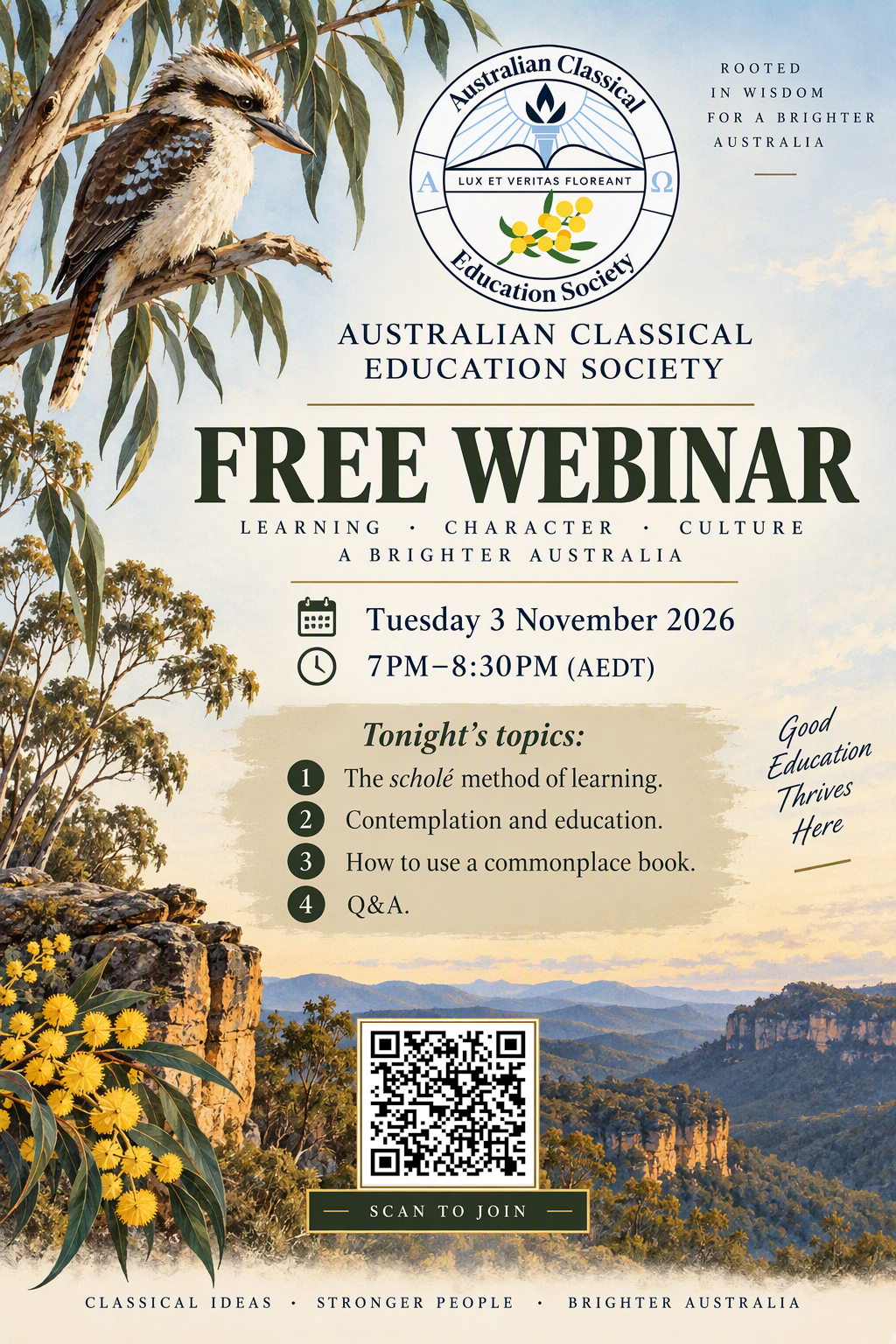
Topics include:
- The schole method of learning.
- Contemplation and education.
- How to use a commonplace book.
- Q&A.
Join us! Use the QR code to join our live Zoom session or this link.
For nearly ten years I have taught Euclid's Elements to twelve-year-olds. A drawer in my desk is full of colored whiteboard markers.
A student is at the board working through Proposition I.5, the one medieval students called "the bridge of asses". He has the isosceles triangle drawn. He has the two sides produced further and cut to be equal, but then he gets stuck. The proposition describes seven points, eleven lines, nine angles and five triangles all overlaid on top of one another. And the figure in front of him is a thicket of black lines that all look alike. So, I pick up the red marker and trace over a line. Then I trace another line in blue. That is enough to get him to see it. But then he goes home, opens the book, and the colour is gone.
The gap between what happened at the board and what sits on the page is what this piece is about.
Read more …
"Education is simply the soul of a society as it passes from one generation to another."
- G.K. Chesterton
Fire spreads rapidly with proper conditions but when it lacks oxygen, heat and fuel, it dissipates quickly. In the last century, the long flame of classical education was nearly extinguished. It was seemingly on its last ember and dampened by frost and lack of energy; however, the fire has been rekindled, and the flame has been growing and spreading across the American landscape among homeschooling families, in private schools, and in charter schools. It continues to gain energy, rapidly. Alleluia!
As the title of this essay suggests, I aim to share some ideas about the fundamentals of classical education and to delve into an important question for our time: Who can provide such an education to today's children? However, before jumping into the heart of classical education, I will start by offering some definitions and then say a little something about the origins, decline and revival of classical education in our day.
Read more …
In a July 3, 1776, letter to his wife Abigail, John Adams voiced his hope for future celebrations of the Declaration of Independence and the birth of their nation: “I am apt to believe that it will be celebrated, by succeeding Generations, as the great anniversary Festival. It ought to be commemorated, as the Day of Deliverance by solemn Acts of Devotion to God Almighty. It ought to be solemnised with Pomp and Parade, with Shows, Games, Sports, Guns, Bells, Bonfires and Illuminations from one End of this Continent to the other from this Time forward forever more.”
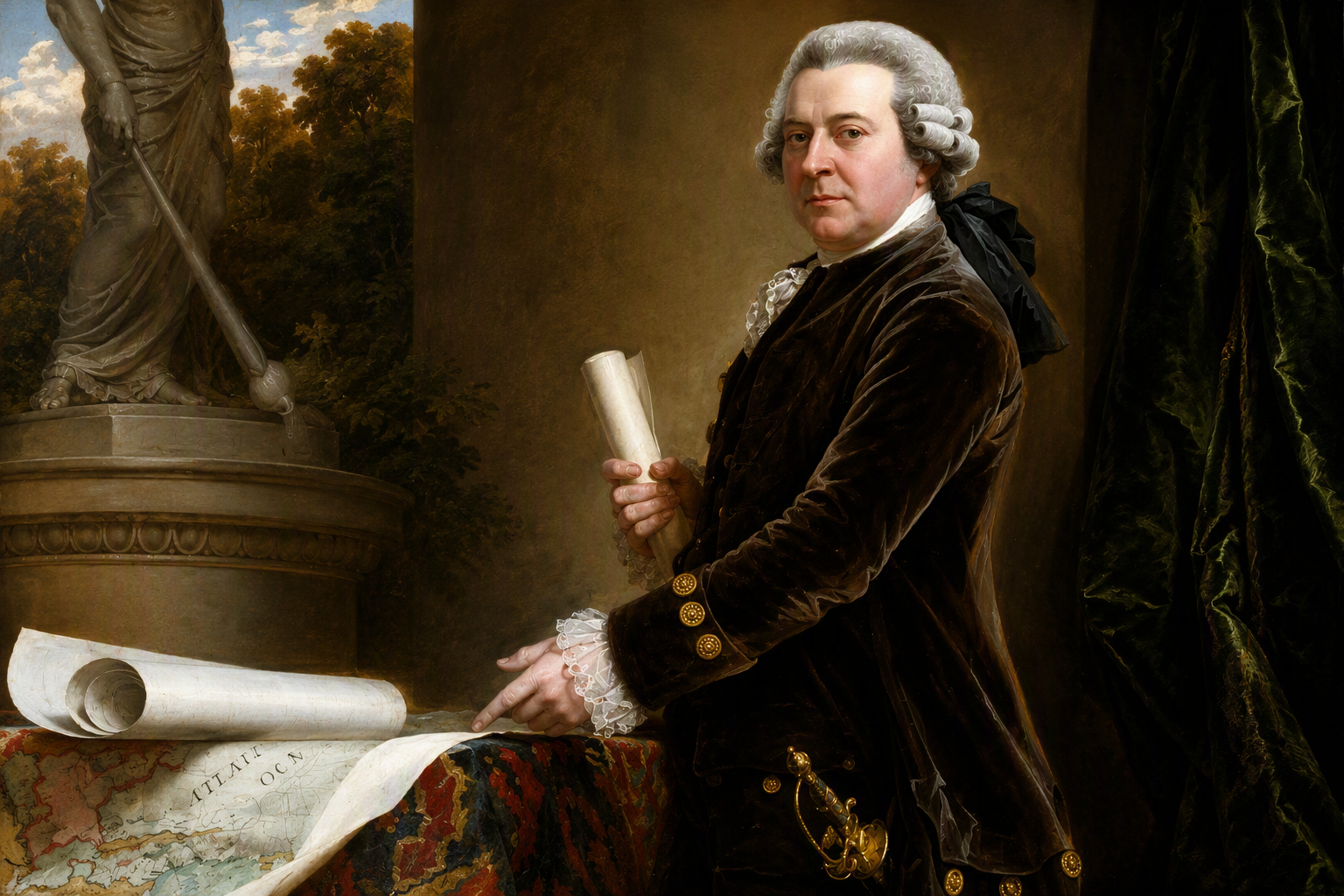
Adams closed his letter soberly, for he knew the cost of American freedom would be great: “You will think me transported with Enthusiasm but I am not. I am well aware of the Toil and Blood and Treasure, that it will cost Us to maintain this Declaration, and support and defend these States. Yet through all the Gloom I can see the Rays of ravishing Light and Glory. I can see that the End is more than worth all the Means. And that Posterity will triumph in that Day’s Transaction, even if We should rue it, which I trust in God We shall not.”
Adams was prescient.
Read more …
The spectacular rise of Artificial Intelligence (AI) has been ardently welcomed as well as anxiously feared.
In so many fields, including education, there are hopes that AI will vastly extend human capacity and the range of understanding. The power of Large Language Models (LLMs) to capture and summarise existing knowledge may provide a platform for finding new solutions to long-standing problems, and extend freedom for all kinds of creative breakthroughs in the arts and sciences. But there are also worries that AI could replace human intelligence in many areas, resulting in job dislocations and depersonalised services as well as academic cheating and bogus qualifications. The energy demands of the new data centres needed to power AI are also likely to have major social and political repercussions.
Read more …
Fifty years ago anyone hearing the term "classical education" would take it to mean the rigorous study of the most important Greek and Latin authors - poets, dramatists, historians and philosophers - in their original languages. Traditional school curricula long focused closely on those studies. Until well into the nineteenth century the sciences and mathematics were comparative neglected, and (amazingly) English was not regarded as a proper subject for study at all! There could be no better evidence of the prevalence of this kind of education than the unofficial name given to the most prestigious degree at Oxford - Greats! The very word speaks of a world which specially revered the achievements of the great thinkers and writers of past ages almost above all else.
Read more …